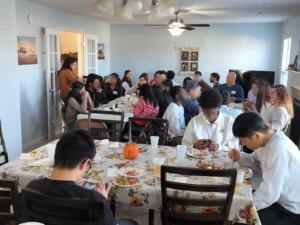

Two of my most formative years in ministry happened on a university campus in the Pacific Northwest. In our early years of ministry, my wife and I served through an initiative of the North American Mission Board aimed at engaging university students in Seattle, Washington. Our assignment was the University of Washington, which, honestly, functioned more like a self-contained city than a campus. As graduates of a small Baptist college in Tennessee, we certainly believed we were ready for one of the largest universities west of the Mississippi, located in one of the least-reached areas of the United States. (Forgive the sarcasm; that was just our enthusiasm talking.)
In reality, we didn’t have a clue what we were doing. The learning curve was steep. Thankfully, the initiative was structured so that we weren’t alone; we were part of a cohort of collegiate workers from across the country, placed strategically at campuses throughout the Northwest. The leadership was excellent—faithful men and women who shepherded us well and labored to see our light shine in a spiritually dark place. But looking back, and certainly not a critique on our dear friends who led us in that season, I often wish I could have a do-over armed with what I’ve learned since.
The training we received was primarily modeled on how Baptist Collegiate Ministries (BCM) had traditionally operated—not only around the country but on that specific campus before our arrival. In other words, we were trained in a form. So, we did what we were instructed to do: we maintained our club status, stood behind tables offering water or hot chocolate, scheduled follow-up meetings with students who showed any interest, hosted free lunches and weekly gatherings, and celebrated when more than ten people showed up. It was hard ministry—harder than anything we could have anticipated. And yet, it remains one of my favorite seasons of life, primarily because of the lives we saw forever changed.
That said, I do wish I could have done some things differently.
Since that experience, I have served in a number of ministry roles, but the most transformative has been over a decade spent in sub-Saharan Africa. In that context, we also engaged university students, but within the framework of a larger church planting strategy. It was a different experience altogether, not because the soil was softer—far from it—but because we approached the work with a clearer framework. One that I believe could have significantly shaped our strategy in Seattle and might serve others now as they engage students on their local campuses.
At the International Mission Board, we train every missionary in what we call the Missionary Task. This framework is not merely a set of activities; it’s a holistic approach to incarnational ministry shaped by biblical mandates and field-tested practice. The six components of the Missionary Task are entry, evangelism, discipleship, healthy church formation, leadership development, and exit to partnership. While developed for cross-cultural contexts, it is a framework that I believe translates well to campus ministry. I will describe those components and offer some insights and questions that may help you consider what that could look like in your context. Intentionally addressing these questions helps shape strategic targets, informs teaming decisions, and guides the development of contextually appropriate tools.
Entry is all about figuring out how to engage a specific context and its people. On a campus, this begins with understanding the rhythms, culture, and unmet needs of students—not assuming they’re all the same or that what worked elsewhere will work here. Every campus has its own identity, worldview, and constellation of cultures. Understanding these dynamics is critical for effective ministry.
Questions to consider:
- What is the cultural identity and worldview of the campus?
- What ethnicities and cultures are represented?
- Why are people here, and what are they seeking?
Evangelism is not merely about events or programs but about gospel proclamation and praying for true conversion. Effective campus evangelism meets people where they are spiritually, relationally, and culturally. It prioritizes listening, invites honest dialogue, and walks patiently with students toward Jesus.
Questions to consider:
- What are effective bridges to gospel conversations in your campus context?
- Which gospel tools are proving most helpful among students?
- Do Christian students understand the gospel well enough to share it clearly and confidently?
Discipleship goes beyond conversions and weekly gatherings. It’s about equipping students to obey all that Jesus commanded, through the Word, empowered by the Spirit, and embedded in Biblical community, especially local churches. It requires long-term, intentional investment and recognizes that discipleship is as much about what to know, be, and do as a Christ-follower.
Questions to ask:
- What does discipleship look like when someone says “yes” to following Jesus?
- Are you involving the local church in the discipleship process?
- What tools do we have to teach believers what to know, be, and do?
Church Formation may sound unusual in a campus environment, but it’s actually a critical component. While encouraging students to plug into local churches is essential, campus ministries also have a unique opportunity: to help students understand the theological importance of faithful church membership during their college years. Campus ministry should not function as a church substitute but as a committed partner to the church, helping students live as active, servant-hearted members. This means fostering habits of worship, accountability, service, and mission within the local church—even during the transient college experience.
Questions to consider:
- How are you teaching students about the importance of belonging to a local church?
- What partnerships exist between your ministry and local congregations?
- How can your campus ministry serve and strengthen the ministries of local churches?
Leadership Development equips students not merely to serve but to lead. It gives them ownership and vision—not just a role in setting up chairs or running slides, but a stake in the mission of God. A campus ministry that makes disciples but doesn’t develop leaders may see activity, but it won’t see multiplication. Leadership development is about equipping faithful men and women who will, in turn, equip others.
Questions to ask:
- How are you identifying and investing in students with leadership potential?
- What opportunities are you providing for students to lead in gospel-centered ways?
- Are your leaders learning how to lead both inside and beyond your ministry?
Exit is about healthy handoff and partnership. In international missions, exit to partnership means leaving behind sustainable, reproducing churches. In campus ministry, exit involves sending out students prepared to love and lead in local churches, global missions, and every sphere of vocation. A well-executed exit equips students not only to survive life after college but to carry the mission forward.
Questions to consider:
- How are you preparing students for life after graduation?
- Do they leave with a vision for serving the church and engaging the world?
- Are your graduates committed to reproducing disciples wherever God sends them?
When we were in Seattle, we were shown what BCM leaders did. But what we needed was not just a method—it was a missionary framework.
The Missionary Task provides just that. It is not a linear checklist or step-by-step formula but a holistic framework that informs every aspect of ministry. When applied to the university campus, it shapes not only what we do, but how and why we do it, always with the goal of forming students into disciples who will joyfully and faithfully lead in healthy churches that glorify God long after their college years. In this way, the campus becomes more than a mission field; it becomes a seedbed for lifelong gospel impact.
It invites us to see the campus not merely as a place to do ministry, but as a mission field—one that deserves a strategic, biblical, and reproducible approach. Whether you are a campus minister, student volunteer, pastor supporting a campus work, or a student yourself, I encourage you to consider this framework. Rather than simply adopting models of campus ministry, my hope is that this framework will encourage you as you continue to labor faithfully where God has placed you. Considering the Missionary Task on the university campus can inspire us to pursue the deeper mission of making disciples who will impact the church and the world for years to come.
Andy Pettigrew has served with the International Mission Board for 18 years, most of those years in sub-Saharan Africa. He currently leads the NextGen efforts for IMB. Contact Andy for follow up or questions: [email protected]
Resources:
Foundations Digital Download
Free Book: Groundwork
Free Training on the Missionary Task: God’s Glory Among the Nations
Coming Soon: Blueprint (Training course and book on God’s Heart for the Nations and tailored for NextGen)